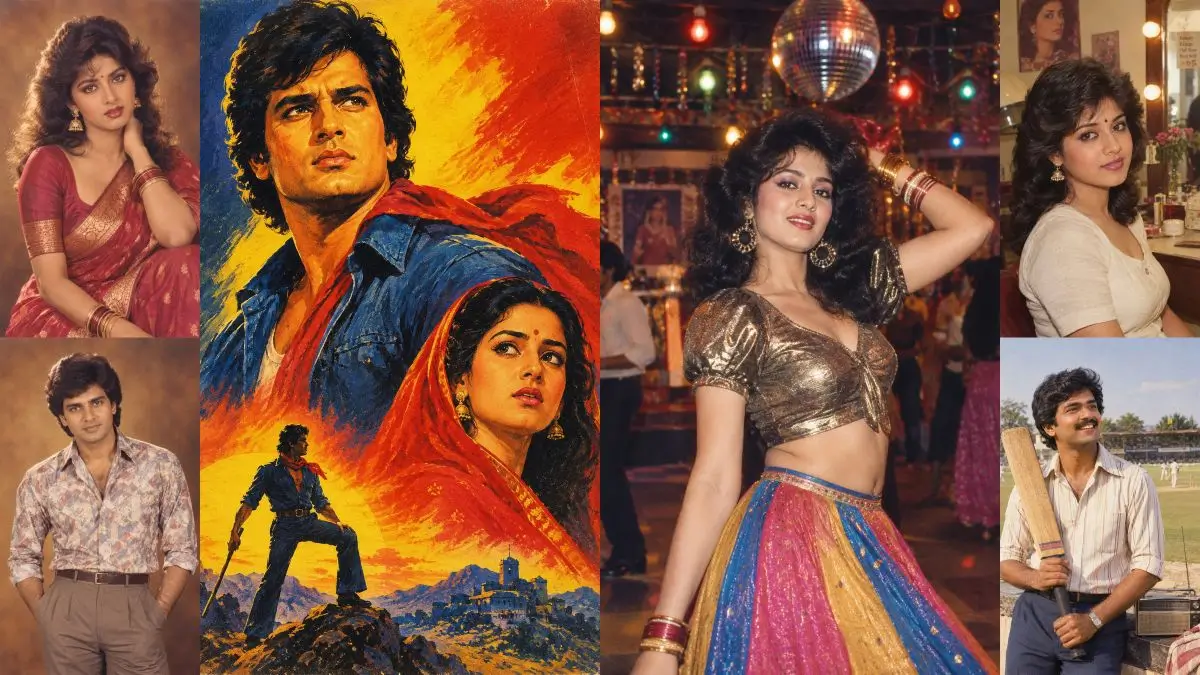
The 1980s hold a special place in Indian pop culture. From iconic Bollywood hairstyles and colourful sarees to classic studio portraits, film-inspired fashion, and old family-album photographs, the decade had a distinctive visual identity. Today, AI image generators make it possible to recreate that nostalgic look using a simple text prompt or your own photograph.
In this guide, you’ll find 22 of the best AI prompts to turn your photo into an 1980s Indian retro trend photo. Every idea includes a detailed style description, a sample image-generation prompt, and a separate photo-transformation prompt you can use with your own picture.
Whether you want a vintage Bollywood heroine look, a classic Indian studio portrait, a retro wedding photograph, or a faded family-album effect, these prompts will help you recreate the charm of 1980s India.
How to Create an 1980s Indian Retro Photo with AI
- Choose a retro style from the list below.
- Copy the sample image prompt if you want to generate a new character or scene.
- Use the personal photo transformation prompt when uploading your own photograph to an AI image editor.
- Select a 2:3 portrait aspect ratio for a vertical vintage portrait.
- Generate the image and adjust the clothing, hairstyle, background, and colours if needed.
Tip: When transforming your own photo, use a clear, well-lit image with your face visible. Add the instruction to preserve your facial identity for a more recognisable result.
1. Classic 1980s Indian Studio Portrait
Style description
Traditional Indian photography studios were popular destinations for families, couples, students, and individuals who wanted a formal portrait. The photographs often featured simple painted backdrops, direct camera-facing poses, carefully arranged hair, and soft but noticeable studio lighting. Colours could appear slightly warm or muted because of the film and printing processes of the time. Men might wear collared shirts, modest sweaters, or formal trousers, while women might choose sarees, salwar kameez, or simple blouses with traditional jewellery. The overall mood should feel dignified, personal, and unmistakably vintage. Rather than using modern fashion-editorial poses or dramatic cinematic lighting, recreate the straightforward composition of a neighbourhood photo studio in 1985. Fine film grain, slightly faded colours, gentle shadows, and subtle print ageing can make the result feel like a photograph discovered in an old Indian family album.

Prompt to transform your own photo:
Transform my uploaded photograph into a realistic 1980s Indian studio portrait. Preserve my facial identity, skin tone, facial structure, and natural features. Style me in authentic mid-1980s Indian clothing appropriate to my gender and appearance. Place me against a simple painted photo-studio backdrop with soft direct flash, warm vintage colours, subtle film grain, and slightly faded photographic-print texture. Keep the pose natural and the composition simple, as if photographed in an Indian neighbourhood studio in 1985. Do not modernise the styling or alter my identity. Use a vertical 2:3 portrait composition.
2. Vintage Bollywood Heroine Look
Style description
The Bollywood heroine aesthetic of the 1980s combined expressive eyes, voluminous hairstyles, colourful outfits, and a glamorous yet recognisable Indian film-star appearance. Women often wore flowing sarees, embellished blouses, salwar suits, statement earrings, bangles, and softly coordinated makeup. Hairstyles could feature considerable volume, feathered layers, side-swept fringes, or softly curled lengths. The image should capture the dramatic charm of a vintage Hindi-film publicity portrait without copying a particular actress or film poster. Warm studio lighting, rich reds, deep blues, jewel tones, and gently softened photographic detail help evoke the era. Keep the styling rooted in Indian cinema rather than contemporary fashion photography. The ideal result looks like a promotional portrait from an imaginary 1980s Hindi movie, with expressive but natural posing, period-appropriate accessories, and a slightly grainy film finish.

Prompt to transform your own photo:
Transform my uploaded photo into an authentic 1980s Bollywood-inspired heroine portrait. Preserve my exact facial identity, natural skin tone, and recognisable features. Style me in a period-appropriate Indian saree or traditional outfit, with voluminous 1980s hair, elegant traditional jewellery, and era-appropriate makeup. Use warm cinematic studio lighting, a classic film-publicity backdrop, slightly faded jewel tones, realistic skin texture, and subtle analogue film grain. Keep the result glamorous but believable, with no modern accessories or contemporary fashion styling. Vertical 2:3 portrait aspect ratio.
3. Retro Bollywood Hero Look
Style description
The classic Hindi-film hero look of the 1980s often combined confident expressions, thick hairstyles, collared shirts, fitted trousers, leather jackets, and occasionally traditional Indian outfits for dramatic scenes. The styling varied between romantic leading-man fashion, action-inspired clothing, and polished publicity portraits. A convincing recreation should use period-appropriate silhouettes and grooming instead of modern fades, oversized streetwear, or contemporary designer accessories. Think of a vintage Indian cinema portrait with a simple studio backdrop, strong but natural posture, and warm film lighting. A little grain and faded colour can make the image resemble a scanned publicity photograph from an old film magazine. The goal is to recreate the decade’s masculine fashion and cinematic confidence without imitating the exact appearance of a real actor.

Prompt to transform your own photo:
Turn my uploaded photograph into a vintage 1980s Indian cinema hero portrait. Preserve my real face, facial structure, skin tone, and identity. Style me in authentic period Indian menswear, such as a patterned collared shirt, high-waisted trousers, or a classic leather jacket. Give my hair a natural 1980s-inspired shape without changing my hairline or facial features unnecessarily. Use warm studio lighting, a cinematic but believable pose, slightly faded film colours, and fine analogue grain. Avoid modern styling. Vertical 2:3 portrait aspect ratio.
4. 1980s Indian Saree Glamour
Style description
The saree was an important part of everyday fashion, celebrations, professional life, and cinematic glamour throughout the 1980s. A vintage saree portrait can feature rich silk, cotton, synthetic blends, traditional borders, printed patterns, or understated everyday draping. Blouses often had classic fitted cuts, while jewellery ranged from simple earrings to gold-tone necklaces and glass bangles. Hairstyles could be softly curled, brushed back, or arranged with natural volume. The most convincing images feel like photographs taken at a family function or a local studio rather than a modern luxury campaign. Use warm colours, realistic fabric folds, slightly soft focus, and modest analogue grain. The outfit should suit the subject’s preferred regional style where possible, since saree fabrics, draping methods, and jewellery vary considerably across India.

Prompt to transform your own photo:
Transform my uploaded photograph into an authentic 1980s Indian saree portrait. Preserve my facial identity, skin tone, body proportions, and natural features. Dress me in a period-appropriate saree and blouse, with traditional jewellery and a hairstyle inspired by Indian fashion in the 1980s. Keep the clothing culturally appropriate and realistic, with believable draping and fabric texture. Use warm studio lighting, a simple backdrop, slightly faded colours, and fine analogue film grain. Do not alter my face or make the result look like a modern fashion advertisement. Vertical 2:3 portrait aspect ratio.
5. Classic Salwar Kameez Portrait
Style description
Salwar kameez was a familiar everyday and occasion-wear choice for Indian women during the 1980s. Depending on personal taste and region, outfits could feature floral prints, geometric patterns, contrasting dupattas, embroidered necklines, and relaxed silhouettes. The look often paired naturally styled hair with simple earrings, bangles, and understated makeup. For men, a related vintage portrait aesthetic can use a traditional kurta-pajama or a simple collared shirt, depending on the intended scene. The photograph should feel like an ordinary but treasured family or studio picture from the period. Avoid current trends such as sharply tailored contemporary cuts, modern cosmetics, or oversized fashion accessories. A softly painted background, natural posture, gentle flash, and faded film colours create an authentic retro mood.

Prompt to transform your own photo:
Restyle my uploaded photo as an authentic 1980s Indian portrait wearing a period-appropriate salwar kameez or another suitable traditional Indian outfit. Preserve my face, skin tone, identity, and natural proportions. Add realistic fabric patterns, a complementary dupatta where appropriate, simple traditional accessories, and era-inspired hair styling. Use warm, slightly faded film colours, soft studio lighting, a simple backdrop, and subtle analogue grain. Keep the result realistic and respectful of Indian clothing traditions. Vertical 2:3 portrait aspect ratio.
6. Retro Indian Wedding Photography
Style description
Indian wedding photographs from the 1980s often had a distinctly documentary feel. Photographers captured posed couple portraits, family group pictures, garland exchanges, ceremonial outfits, and candid moments under bright flash or simple venue lighting. Brides might wear traditional red, maroon, or regionally appropriate bridal attire, while grooms might wear a sherwani, suit, or traditional outfit. Jewellery, garlands, decorative fabric, and wedding-stage details should reflect the intended region and community rather than combining unrelated traditions indiscriminately. Slightly uneven exposure, warm tones, visible film grain, and soft print ageing help recreate the atmosphere of an old wedding album. The goal is not to make the image look like a modern wedding advertisement, but to evoke a genuine family photograph from around 1985.

Prompt to transform your own photo:
Transform my uploaded photograph into an authentic 1980s Indian wedding portrait. Preserve my facial identity and the identity of any other person in the original image. Add traditional wedding clothing, jewellery, garlands, and a period-appropriate backdrop suited to the intended Indian regional tradition. Use realistic fabric details, warm direct-flash photography, slightly faded colours, and subtle old-film grain. Keep the pose natural and the scene believable as a family wedding photograph from 1985. Do not change anyone’s identity. Vertical 2:3 portrait aspect ratio.
7. Vintage Indian Family Album
Style description
Old Indian family albums are filled with pictures taken in living rooms, courtyards, gardens, and neighbourhood studios. The charm comes from ordinary details: a sofa with patterned upholstery, curtains, potted plants, wooden furniture, familiar clothing, and family members standing or sitting close together. Men may wear simple shirts or sweaters, women may wear sarees or salwar kameez, and children may wear period-appropriate dresses, shorts, or shirts. Poses are usually straightforward, with everyone looking toward the camera. The colours may be slightly faded, and the print may show mild grain or small signs of age. The photograph should feel affectionate and authentic, not artificially distressed or excessively sepia-toned. This is an especially useful style for recreating the atmosphere of a family album from an Indian home in the mid-1980s.

Prompt to transform your own photo:
Turn my uploaded photo into a nostalgic 1980s Indian family-album photograph. Preserve the identities and facial features of everyone shown. Recreate period-appropriate clothing, a believable Indian home interior, warm household lighting, simple poses, and natural expressions. Add gently faded colours, subtle film grain, and the texture of an old printed photograph without hiding facial details. Keep the result affectionate, realistic, and historically inspired. Vertical 2:3 portrait aspect ratio.
8. 1980s Indian College Student Look
Style description
Indian college fashion in the 1980s was shaped by practical clothing, campus culture, regional preferences, and the influence of popular Hindi films. Students might wear tucked-in shirts, high-waisted trousers, simple sweaters, jeans, cotton salwar kameez, or modest printed kurtas. Hair was often naturally voluminous, and accessories were generally practical rather than heavily branded. A campus background might include a college corridor, noticeboard, bicycle, books, or a leafy courtyard. The styling should suggest the decade without relying on modern backpacks, smartphones, current sneaker designs, or contemporary hairstyles. A casual pose and slightly faded film colour can make the image feel like a personal photograph from a student’s album. The concept works for both men and women when the clothing and environment are adapted naturally to the subject.

Prompt to transform your own photo:
Transform my uploaded photograph into a believable 1980s Indian college-student portrait. Preserve my facial identity, natural skin tone, and recognisable features. Dress me in period-appropriate student clothing suited to my gender and personal style. Add a realistic Indian college courtyard, simple books or a bicycle where appropriate, and natural daylight. Use slightly faded colours, authentic film grain, and a casual mid-1980s photographic style. Avoid modern accessories and do not change my identity. Vertical 2:3 portrait aspect ratio.
9. Retro Mumbai Film-Star Style
Style description
Mumbai, then widely known as Bombay, was central to Hindi-film production during the 1980s. A city-inspired portrait can evoke the era through old cinema façades, bustling streets, classic taxis, modest storefronts, and the visual atmosphere of a film publicity photograph. Clothing might include a patterned shirt, classic trousers, a saree, or a traditional outfit with a cinematic touch. The scene should feel like a plausible mid-1980s city environment, with period-appropriate vehicles and signage rather than present-day skyscrapers or modern traffic. Warm daylight, slightly hazy colours, and subtle film grain help create the feeling of a photograph taken during an ordinary day in Bombay. This concept works particularly well when the subject is posed naturally against an urban background rather than surrounded by exaggerated cinematic effects.

Prompt to transform your own photo:
Restyle my uploaded photograph as an authentic 1980s Bombay street portrait. Preserve my facial identity and natural features. Use period-appropriate Indian clothing and place me in a believable mid-1980s Mumbai street setting with old shopfronts, period vehicles, and warm natural light. Add realistic film grain, slightly faded colours, and a candid vintage-photography feel. Avoid modern street objects, contemporary branding, and changes to my face. Vertical 2:3 portrait aspect ratio.
10. Classic Indian Film Poster Portrait
Style description
Indian film posters of the 1980s were known for expressive portraits, bold colours, dramatic compositions, and hand-painted visual styles. A modern AI recreation can borrow those broad design characteristics without copying a real poster, film title, or actor. The portrait might use a strong pose, a vivid painted background, and clothing inspired by period Bollywood fashion. Reds, yellows, blues, and deep greens can create a striking visual mood, while slightly uneven print texture suggests traditional poster production. If text is added, keep it generic or leave the design without text, because AI-generated lettering can look distorted. The goal is to evoke the colourful energy of old Indian cinema advertising while producing an original composition featuring the subject.

Prompt to transform your own photo:
Transform my uploaded photo into an original 1980s Indian cinema-poster-style portrait. Preserve my real facial identity, skin tone, and recognisable features. Use period-inspired Indian clothing, expressive but natural posing, hand-painted background textures, bold vintage colours, and the slightly rough printed texture of an old film poster. Do not copy a specific actor, film poster, or movie artwork. Avoid distorted facial features and illegible text. Vertical 2:3 portrait aspect ratio.
11. 1980s Indian Disco Dance Look
Style description
Disco-inspired fashion and dance scenes became part of Indian popular culture through films, stage performances, and urban nightlife. The look could feature shiny shirts, metallic accents, colourful dresses, fitted trousers, statement belts, and voluminous hairstyles. Lighting might include coloured bulbs, reflective decorations, and a simple dance-floor backdrop. To keep the result authentic, use the visual language of a modest 1980s dance venue rather than a modern electronic music festival. The clothes should look like garments from the period, with believable materials and silhouettes. Slightly saturated colours, direct flash, and visible analogue grain help the image feel like an old party photograph. The concept can be adapted for a man, woman, or couple while retaining a playful Indian retro mood.

Prompt to transform your own photo:
Transform my uploaded photo into a fun 1980s Indian disco portrait. Preserve my facial identity and natural features. Dress me in period-appropriate disco-inspired clothing suitable for my appearance, with authentic 1980s hair and accessories. Add a modest vintage dance-floor background, coloured lights, direct-flash photography, slightly saturated film colours, and realistic analogue grain. Keep the image nostalgic rather than modern or futuristic. Vertical 2:3 portrait aspect ratio.
12. Vintage Indian Rock-Star Style
Style description
Indian rock and pop performance culture in the 1980s blended Western-inspired stage clothing with local music scenes, college performances, and emerging independent acts. A retro musician portrait might feature a leather jacket, patterned shirt, denim, a guitar, or a simple microphone stand. Hair should have period-appropriate volume, while accessories should be restrained and believable for the decade. The background could be a small concert venue, rehearsal room, or backstage area rather than a massive modern festival stage. Use direct flash, slightly moody lighting, and subtle film grain to evoke a photograph taken for a music magazine. The image should suggest the spirit of an Indian musician in 1985 without pretending to depict a real celebrity or copying a specific band’s promotional artwork.

Prompt to transform your own photo:
Turn my uploaded photograph into an authentic 1980s Indian rock-musician portrait. Preserve my face, identity, skin tone, and natural features. Style me in period-appropriate musician clothing, with a guitar or microphone if suitable. Add a believable rehearsal room or small-stage setting, natural period-inspired hair, moody analogue lighting, and subtle film grain. Keep the look rooted in the Indian music scene of the 1980s, without copying a real celebrity. Vertical 2:3 portrait aspect ratio.
13. Retro Indian Beauty Parlour Portrait
Style description
Beauty parlours and neighbourhood salons offered women opportunities to experiment with hairstyles, makeup, and occasion-ready looks during the 1980s. A vintage portrait inspired by this setting can feature softly curled or feathered hair, traditional earrings, a simple saree or blouse, and period-appropriate makeup. The environment might include a basic mirror, a dressing table, patterned curtains, or a modest salon chair. The photograph should resemble a personal portrait taken after getting ready for a family function rather than a modern beauty campaign. Keep the makeup believable, preserve natural skin texture, and avoid contemporary contouring or heavily edited facial features. Warm indoor light, slightly faded colours, and fine analogue grain give the image the nostalgic feel of a photograph from an Indian beauty parlour in 1985.

Prompt to transform your own photo:
Transform my uploaded photograph into a nostalgic 1980s Indian beauty-parlour portrait. Preserve my exact facial identity, skin tone, and natural facial features. Give me a believable period-inspired hairstyle and makeup, with traditional accessories suited to the outfit. Place me in a modest vintage Indian parlour with warm lighting and simple period details. Avoid modern beauty filters, excessive skin smoothing, and changes to my face. Add subtle analogue grain and slightly faded colours. Vertical 2:3 portrait aspect ratio.
14. 1980s Indian Couple Photography
Style description
Couple portraits from the 1980s were often formal, affectionate, and carefully posed. Couples might be photographed in a studio, garden, public park, or at a family gathering. Men commonly wore collared shirts, trousers, or sweaters, while women might wear sarees, salwar kameez, or other traditional outfits. Poses tended to be simple, with the couple standing side by side or sitting together against a painted backdrop. The atmosphere should feel personal and respectful rather than like a contemporary engagement shoot. Use natural expressions, realistic body language, warm film colours, and modest accessories. Slight grain and a gently faded print finish create the impression of a treasured photograph from an Indian family album in 1985.

Prompt to transform your own photo:
Transform my uploaded couple photograph into a realistic 1980s Indian couple portrait. Preserve the identities, facial features, skin tones, and natural proportions of both people. Restyle the clothing and hair to suit the mid-1980s, and place the couple in a simple Indian studio or garden setting. Use a natural pose, warm film colours, soft direct flash, and subtle analogue grain. Do not alter either person’s identity or add extra people. Vertical 2:3 portrait aspect ratio.
15. Old-School Indian Passport-Style Studio Portrait
Style description
Formal identification and document-style photographs are different from glamorous portraits, but they also carry a recognisable vintage look. An old-school Indian studio portrait can feature a plain light background, neat clothing, a straight posture, and a neutral or gently serious expression. Men might wear a simple collared shirt, while women might wear a saree, salwar kameez, or another modest outfit. Hair should look tidy and period-appropriate. The image should evoke the aesthetic of a photograph taken at a local studio in the 1980s, not claim to be a valid modern passport or official identity photograph. Avoid artificial stamps, document numbers, official emblems, or fabricated identification details. Soft direct lighting, restrained colours, and a lightly grainy print texture are enough to create the nostalgic style.

Prompt to transform your own photo:
Restyle my uploaded photo as a nostalgic 1980s Indian formal studio portrait. Preserve my facial identity, skin tone, facial structure, and natural expression. Use neat period-appropriate clothing, a plain light background, straightforward head-and-shoulders framing, and soft studio lighting. Add slight film grain and a gently aged print appearance. Do not add official document markings or alter my identity. Vertical 2:3 portrait aspect ratio.
16. Vintage Indian Railway Station Scene
Style description
Indian railway stations have long been memorable settings for family departures, reunions, travel portraits, and everyday life. A photograph inspired by the 1980s can feature a period-appropriate platform, older railway signage, classic luggage, simple clothing, and a train that resembles the era’s rolling stock. The subject might wear a cotton saree, salwar kameez, collared shirt, or trousers suited to the scene. Avoid contemporary station displays, modern train designs, and current electronic signage. The mood can be candid and documentary, as if a family member took a photograph before a journey. Warm daylight, slightly faded colours, and visible analogue grain create a nostalgic travel memory without overdramatizing the scene.

Prompt to transform your own photo:
Transform my uploaded photograph into a nostalgic 1980s Indian railway-station portrait. Preserve my facial identity and natural appearance. Place me on a believable period railway platform with appropriate Indian clothing, a vintage suitcase, and an era-suitable train in the background. Use realistic daylight, documentary-style framing, slightly faded film colours, and subtle analogue grain. Avoid modern station equipment and do not change my face. Vertical 2:3 portrait aspect ratio.
17. Retro Indian Market Street Fashion
Style description
Local markets in 1980s India offered a colourful mix of textiles, shop signs, bicycles, handcarts, street vendors, and everyday fashion. A retro street portrait can capture this atmosphere through a believable Indian bazaar setting and clothing typical of the time. Women might wear printed sarees or salwar kameez, while men might wear patterned shirts, plain trousers, or simple traditional garments. The background should include period-appropriate shopfronts and objects rather than modern advertising screens or current vehicle models. Natural sunlight and candid composition make the scene feel documentary. Slightly warm film tones and subtle grain help the photograph resemble an old street photograph found in a family album. Regional market details should be selected consistently rather than mixing unrelated architectural or cultural elements.

Prompt to transform your own photo:
Restyle my uploaded photo as an authentic 1980s Indian market-street portrait. Preserve my face, skin tone, identity, and natural proportions. Dress me in believable period-appropriate Indian clothing and place me in a realistic local bazaar with vintage shopfronts, fabric displays, and everyday street details. Use natural light, warm film colours, and subtle analogue grain. Avoid modern signs and objects that break the historical atmosphere. Vertical 2:3 portrait aspect ratio.
18. 1980s Cricket Fan Portrait
Style description
Cricket has been a major part of Indian sporting culture for generations, making a vintage cricket-fan portrait a natural choice for an Indian retro collection. The scene can feature a fan wearing a simple collared shirt, a period-inspired cricket sweater, or a classic white cricket outfit. Props might include a wooden cricket bat, a red leather ball, or an old-style transistor radio. A modest ground, school field, or neighbourhood cricket setting will feel more authentic than a modern stadium filled with digital advertising. The image should capture the everyday excitement of following cricket in the 1980s. Keep logos and team insignia generic unless they are deliberately and accurately specified. Natural sunlight, faded colours, and analogue grain help make the result look like an old sporting photograph.

Prompt to transform your own photo:
Transform my uploaded photograph into a nostalgic 1980s Indian cricket-fan portrait. Preserve my facial identity and natural features. Dress me in period-appropriate cricket-inspired clothing and add a classic wooden bat, red cricket ball, or vintage transistor radio where suitable. Use a believable Indian cricket-ground background, natural daylight, slightly faded colours, and subtle analogue grain. Avoid modern jerseys and contemporary stadium technology. Vertical 2:3 portrait aspect ratio.
19. Classic Indian Festival Photography
Style description
Indian festivals have always offered memorable opportunities for family photographs. A 1980s festival portrait might feature traditional clothing, modest home decorations, flower garlands, clay lamps, or regionally appropriate festive objects. The exact details should match the intended celebration: a Diwali scene should not automatically include decorations associated with a different festival, for example. Clothing can include sarees, salwar kameez, kurtas, or other traditional outfits suitable for the subject and region. Use the warm, slightly imperfect appearance of a photograph taken during a family celebration rather than a modern commercial festive campaign. Gentle flash, warm indoor lighting, realistic fabric textures, and subtle grain can recreate the feeling of an old festival photograph.


Prompt to transform your own photo:
Transform my uploaded photograph into a nostalgic 1980s Indian festival portrait. Preserve my facial identity, skin tone, and natural features. Dress me in traditional clothing suitable for the intended festival and add historically plausible decorations consistent with that celebration. Use warm household lighting, natural colours, realistic fabric details, and subtle film grain. Avoid mixing unrelated festival traditions or adding modern decorative elements. Vertical 2:3 portrait aspect ratio.
20. Vintage Doordarshan-Era Portrait
Style description
The Doordarshan era evokes the visual atmosphere of Indian television before the widespread adoption of modern digital screens and high-definition production. A portrait inspired by that period can feature a modest television set, a simple living room, understated clothing, and warm indoor lighting. The subject might wear everyday Indian clothing or a neatly pressed shirt, creating the feel of an ordinary home photograph taken while the family watched television. A little softness, analogue grain, and muted colour can evoke the period without turning the image into an inaccurate broadcast screenshot. Avoid contemporary flat-screen televisions, streaming interfaces, and modern entertainment systems. The focus should remain on the person and the home environment, with nostalgic details serving as a subtle backdrop.

Prompt to transform your own photo:
Turn my uploaded photo into a nostalgic Doordarshan-era Indian home portrait. Preserve my facial identity and natural features. Place me in a believable 1980s Indian living room with a box television, simple furniture, period-appropriate clothing, and warm household lighting. Add gently faded colours and subtle analogue grain. Avoid modern flat-screen televisions, streaming interfaces, and contemporary electronics. Vertical 2:3 portrait aspect ratio.
21. 1980s Small-Town Indian Photography
Style description
Small-town India in the 1980s had a distinctive everyday atmosphere shaped by local shops, modest homes, bicycles, public spaces, and close-knit neighbourhoods. A vintage portrait can evoke this environment through ordinary clothing, understated backgrounds, and natural posing. The subject might wear a simple collared shirt, saree, salwar kameez, or kurta, depending on the setting and personal style. Background details could include a courtyard, a local shopfront, a modest veranda, or a quiet street. The goal is to portray the period respectfully without suggesting that all Indian towns looked alike. Choose architectural and cultural details appropriate to the intended region. Warm sunlight, realistic textures, slightly faded colours, and gentle film grain create the look of a personal photograph from 1985.

Prompt to transform your own photo:
Transform my uploaded photograph into an authentic 1980s small-town Indian portrait. Preserve my real face, skin tone, identity, and natural proportions. Place me in a believable regional Indian setting with period-appropriate clothing, architecture, and everyday details. Use natural sunlight, slightly faded film colours, and subtle analogue grain. Keep the environment respectful and realistic, without stereotypes or modern objects that break the period setting. Vertical 2:3 portrait aspect ratio.
22. Warm, Faded 1980s Indian Family Album portrait
Style description
Some of the most nostalgic Indian photographs are not professionally posed portraits but old prints that have gradually faded with time. They may feature a family member standing in a garden, sitting beside a window, or posing outside the family home. Colours can shift toward warm reds, faded browns, soft greens, and muted blues. Fine grain, gentle softness, and minor print ageing help evoke the physical appearance of an old photograph. The important distinction is that the image should remain clear enough to recognise the subject. Excessive scratches, extreme sepia effects, or heavy blurring can make it look artificially aged rather than authentic. Use ordinary Indian clothing, a familiar setting, and natural expressions to recreate the personal feeling of a photograph preserved in a family album for decades.

Prompt to transform your own photo:
Transform my uploaded photograph into a warm, faded 1980s Indian family photograph. Preserve my facial identity, skin tone, natural features, and the original subject’s recognisability. Recreate a period-appropriate Indian setting and clothing where needed. Apply gently faded colours, realistic analogue grain, soft contrast, and a lightly aged printed-photo texture. Keep the image clear, natural, and emotionally nostalgic. Do not overdo scratches, sepia, blur, or facial alterations. Vertical 2:3 portrait aspect ratio.
Key Features of 1980s Indian AI Retro Photos
To create convincing results, focus on the visual details that distinguish vintage Indian photographs from modern retro filters.
- Period-appropriate clothing: Sarees, salwar kameez, kurtas, collared shirts, high-waisted trousers, and era-inspired jackets.
- Authentic hairstyles: Voluminous hair, feathered layers, natural curls, and period-appropriate grooming.
- Traditional accessories: Glass bangles, simple earrings, gold-tone jewellery, classic belts, and modest vintage props.
- Indian locations: Neighbourhood studios, family homes, college campuses, railway stations, local markets, and modest wedding venues.
- Analogue photographic texture: Fine film grain, slightly faded colours, soft contrast, and realistic print ageing.
- Natural poses: Straightforward studio portraits, family-style compositions, and candid street photography.
Benefits of Using AI for 1980s Indian Retro Photos
AI image tools make it easier to explore vintage aesthetics without buying period clothing, arranging a studio, or searching for old props.
- Personalised nostalgia: Transform your own portrait into a style inspired by Indian family albums and classic cinema.
- Creative freedom: Experiment with sarees, traditional menswear, old studios, and vintage city scenes.
- Social media content: Create distinctive profile pictures, posts, and retro-themed creative projects.
- Family keepsakes: Give personal photographs an old-print aesthetic while retaining recognisable faces.
- Multiple variations: Try different backgrounds, outfits, hairstyles, and lighting styles using the same photograph.
Sample Image Prompt vs. Personal Photo Transformation Prompt
| Feature | Sample image prompt | Personal photo transformation prompt |
|---|---|---|
| Main purpose | Generate a new character or scene | Restyle an uploaded photograph |
| Facial identity | Creates a fictional subject | Should preserve your identity |
| Clothing | Specifies the full outfit | Changes or adapts the existing outfit |
| Background | Creates a new setting | Replaces or modifies the original setting |
| Best use | Inspiration and concept images | Personal portraits and profile pictures |
Tips for Better 1980s Indian AI Photos
1. Specify the decade clearly
Use phrases such as “mid-1980s Indian studio photography” or “Indian family portrait from 1985.” This helps the AI avoid mixing in clothing and objects from the 1990s or modern day.
2. Describe the clothing
Instead of simply asking for a retro look, specify a saree with a traditional border, a printed salwar kameez, a tucked-in collared shirt, or high-waisted trousers.
3. Mention the photographic style
Words such as “direct flash,” “35mm film grain,” “faded print colours,” and “soft studio lighting” can produce a more convincing vintage result.
4. Preserve facial identity
When using your own photo, explicitly ask the AI to preserve your facial structure, skin tone, eyes, nose, and other recognisable features.
5. Choose culturally consistent details
Indian fashion and photography vary by region, language, community, and occasion. Specify the relevant setting rather than combining unrelated regional traditions.
6. Avoid excessive ageing effects
Too much blur, sepia, or artificial damage can obscure the face. Subtle fading and grain usually look more realistic.
7. Use the right aspect ratio
For vertical portraits, request a 2:3 aspect ratio. If your image tool does not support that exact ratio, select its closest portrait option and crop afterward.
Common Mistakes to Avoid
- Using vague prompts: “Make it retro” does not explain which Indian decade or visual style you want.
- Mixing eras: Modern smartphones, contemporary hairstyles, and current vehicles can undermine the 1980s aesthetic.
- Over-editing faces: Strong beauty filters can make the result look unlike the original person.
- Ignoring regional clothing: Choose garments and accessories that suit the intended Indian setting.
- Adding too many effects: Heavy scratches and extreme colour shifts often look artificial.
- Forgetting the composition: Mention portrait framing, the subject’s pose, and the background.
- Expecting perfect text: AI-generated film posters and signs may contain misspelled words. Add text separately if accuracy matters.
Frequently Asked Questions
1. What is the best AI prompt for an 1980s Indian retro photo?
A good starting prompt is: “Transform my photo into an authentic 1980s Indian studio portrait, preserving my facial identity, with period-appropriate Indian clothing, warm film colours, subtle 35mm grain, soft direct flash, and a simple vintage studio backdrop. Use a vertical 2:3 portrait composition.”
2. Can I turn my own photo into a vintage Bollywood portrait?
Yes. Upload a clear photo to an AI image editor and use a transformation prompt that describes the clothing, hairstyle, lighting, and cinematic mood. Include an instruction to preserve your facial identity.
3. Can AI create an 1980s Indian saree look?
Yes. Specify the saree fabric, colour, border, blouse style, jewellery, hairstyle, and vintage studio setting. The more precise the clothing description, the more consistent the result is likely to be.
4. Which aspect ratio works best for retro portraits?
A 2:3 vertical ratio works well for classic studio portraits, fashion images, and vintage family photographs. It also provides useful space for the subject and background.
5. How can I make an AI image look like an old Indian photograph?
Use slightly faded colours, realistic film grain, soft contrast, period-appropriate clothing, and a believable Indian setting. Avoid excessive sepia and artificial scratches.
6. Can I create retro photos of men and women?
Yes. The prompts can be adapted for gentlemen, ladies, couples, families, and fictional characters. Specify clothing and grooming that suit the intended subject.
7. Which AI tools can I use for these prompts?
You can try compatible image-generation or image-editing tools that accept text prompts and uploaded photographs. Available features vary by platform, particularly for face preservation and aspect-ratio control.
8. Will the AI keep my face unchanged?
Not always. Face preservation depends on the tool, image quality, and strength of the transformation. Use a clear original photograph and repeat the instruction to preserve facial identity. Check the output carefully before sharing it.
9. Can I create a retro Indian photo without uploading my own picture?
Yes. Use the sample image-generation prompts to create a fictional Indian character or scene. You can customise the age, outfit, background, and photographic style.
10. How do I make the result look Indian rather than American retro?
Specify Indian clothing, local studio backdrops, period-appropriate Indian homes and streets, traditional accessories, and an Indian setting. Avoid generic American high-school imagery, modern Western fashion, and unrelated cultural details.
Conclusion
Creating an 1980s Indian retro photo with AI is a fun way to revisit the fashion, cinema, and everyday photography of a memorable decade. From vintage Bollywood-inspired portraits and traditional saree looks to college photographs, railway scenes, and old family-album styles, these 22 prompts provide plenty of ways to experiment.
For the most convincing results, be specific about the year, clothing, hairstyle, background, and photographic texture. If you are transforming your own picture, always include instructions to preserve your facial identity and natural features.
Choose a favourite style, copy the prompt, and experiment with different variations until you find the perfect nostalgic look. A few well-chosen details can turn an ordinary portrait into an image that feels like a treasured photograph from 1980s India.